10 Best ActiveCampaign Alternatives in 2026 (Free & Paid)
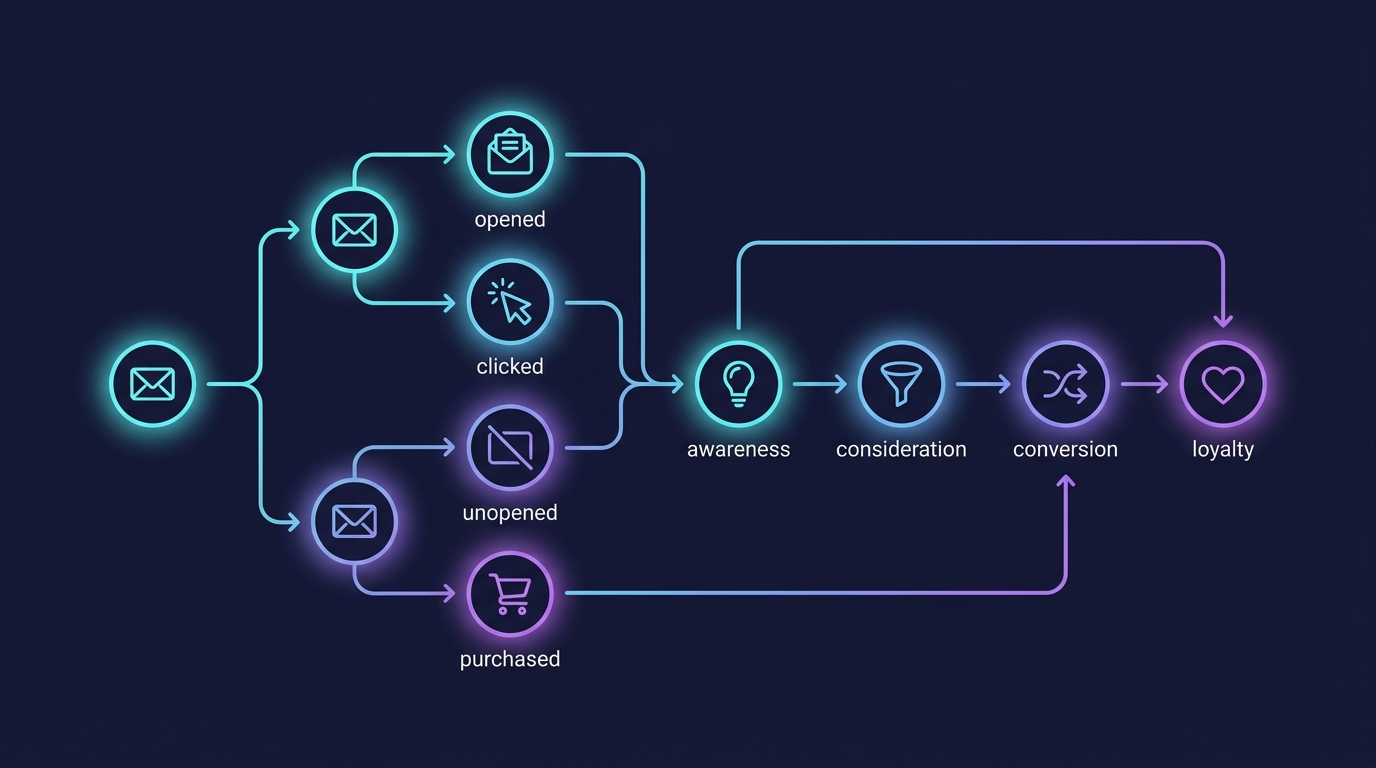
ActiveCampaign is a powerful email marketing and automation platform, but its complexity and price increases have led many businesses to seek alternatives. Whether you need something simpler, cheaper, more focused on e-commerce, or with better deliverability, this guide covers the 10 best ActiveCampaign alternatives in 2026 with honest assessments of each.
Quick Comparison: Top ActiveCampaign Alternatives
| Tool | Best For | Starting Price | Rating |
|---|---|---|---|
| Mailchimp | Beginners, email newsletters | Free / $13/mo | 4.4/5 |
| Klaviyo | E-commerce automation | Free / $20/mo | 4.7/5 |
| Drip | E-commerce, DTC brands | $39/mo | 4.4/5 |
| ConvertKit | Creators, bloggers | Free / $9/mo | 4.5/5 |
| Brevo (Sendinblue) | Budget, unlimited contacts | Free / $9/mo | 4.5/5 |
| GetResponse | Webinars + email marketing | Free / $15.58/mo | 4.3/5 |
| MailerLite | Simplicity, affordability | Free / $9/mo | 4.6/5 |
| Omnisend | E-commerce, SMS + email | Free / $16/mo | 4.6/5 |
| HubSpot | All-in-one marketing suite | Free / $15/mo | 4.5/5 |
| Constant Contact | Small businesses, events | $12/mo | 4.0/5 |
Why Businesses Seek ActiveCampaign Alternatives
ActiveCampaign is genuinely powerful, but the complexity of its automation builder can be overwhelming for teams without dedicated marketing operations staff. Pricing scales aggressively with list size — at 10,000 contacts the Plus plan runs $70/month, and advanced features like predictive sending and attribution require the Professional plan at $187/month. Many businesses find they're paying for sophistication they don't fully use. Simpler alternatives deliver 80% of the results at a fraction of the cost.
1. Mailchimp — Best for Beginners and Email Newsletters
Mailchimp is the world's most recognized email marketing platform and remains an excellent ActiveCampaign alternative for businesses that primarily send newsletters and simple campaigns. Its drag-and-drop email builder, hundreds of templates, and audience management tools are polished and easy to use. Mailchimp's AI creative assistant generates email designs based on your brand automatically.
Pros:
- Most recognized brand — easy to justify to stakeholders
- Excellent drag-and-drop email builder with hundreds of templates
- AI creative assistant for automated design
- Generous free plan: 500 contacts, 1,000 emails/month
- Strong landing page builder and sign-up forms
Cons:
- Automation is significantly less powerful than ActiveCampaign
- Pricing jumps significantly with list growth
- Deliverability has faced some criticism historically
Pricing: Free (500 contacts), Essentials at $13/mo, Standard at $20/mo, Premium at $350/mo.
Best For: Small businesses, bloggers, and nonprofits sending newsletters with basic automation needs. Visit Mailchimp →
2. Klaviyo — Best for E-Commerce Email Marketing
Klaviyo has become the e-commerce email marketing standard, replacing ActiveCampaign for most Shopify and WooCommerce stores. Its real-time behavioral tracking lets you send emails based on specific product views, cart values, and purchase history with a level of precision ActiveCampaign can't match for retail. Pre-built flows for abandoned cart, browse abandonment, and post-purchase sequences come ready to use.
Pros:
- Best-in-class Shopify and WooCommerce integration
- Real-time behavioral tracking for precise segmentation
- Pre-built e-commerce flows (cart abandonment, VIP, win-back)
- Combined email + SMS platform
- Predictive analytics: predicted LTV, next order date
Cons:
- Expensive at scale — list-based pricing adds up
- Overkill for non-e-commerce businesses
- Can be complex to set up advanced flows
Pricing: Free (250 contacts, 500 emails/mo), Email at $20/mo, Email + SMS at $35/mo. Scales with contacts.
Best For: E-commerce brands on Shopify, WooCommerce, or BigCommerce wanting the most powerful email automation for retail. Visit Klaviyo →
3. Drip — Best for DTC E-Commerce Brands
Drip positions itself as the "ECRM" (E-commerce CRM) and focuses exclusively on e-commerce. Unlike Klaviyo which serves brands of all sizes, Drip targets direct-to-consumer brands that need sophisticated automation without Klaviyo's price at scale. Its visual workflow builder, onsite tracking, and advanced segmentation are excellent for mid-market e-commerce teams.
Pros:
- Built exclusively for e-commerce — no feature bloat
- Excellent visual workflow automation builder
- Onsite behavior tracking for precise segmentation
- Revenue attribution reporting
- 14-day free trial available
Cons:
- No free plan after trial period
- Not suitable for non-e-commerce use cases
- Higher starting price than MailerLite or Brevo
Pricing: Starts at $39/mo for 2,500 contacts. Scales with list size.
Best For: Growing DTC e-commerce brands that want powerful automation specifically designed for online retail. Visit Drip →
4. ConvertKit — Best for Creators and Bloggers
ConvertKit (now rebranding as Kit) is purpose-built for creators — bloggers, podcasters, YouTubers, course creators, and newsletter writers. Its simple visual automation builder, subscriber tagging system, and landing page tools are designed around how creators operate. ConvertKit also has a commerce feature for selling digital products directly without third-party integrations.
Pros:
- Built for creators — intuitive tagging and segmentation
- Sell digital products directly through ConvertKit Commerce
- Clean, distraction-free email editor focused on writing
- Visual automation builder that's genuinely easy to use
- Free plan up to 1,000 subscribers
Cons:
- Limited email templates — text-based focus
- Not designed for complex e-commerce or B2B workflows
- Fewer integrations than ActiveCampaign
Pricing: Free (1,000 subscribers), Creator at $9/mo, Creator Pro at $25/mo.
Best For: Bloggers, newsletter creators, course builders, and podcasters who need email marketing aligned with their creator workflow. Visit ConvertKit →
5. Brevo (Sendinblue) — Best Value with Unlimited Contacts
Brevo (formerly Sendinblue) pricing is based on emails sent rather than contacts stored — a fundamentally different model that makes it dramatically cheaper for businesses with large lists but lower send frequency. The free plan includes unlimited contacts and 300 emails/day. Brevo also includes SMS marketing, WhatsApp campaigns, live chat, and landing pages in an all-in-one package.
Pros:
- Unlimited contacts on all plans — pay for sends, not storage
- Free plan with 300 emails/day — most generous free tier
- SMS, WhatsApp, and email all in one platform
- Built-in transactional email (SMTP) service
- GDPR-compliant EU data storage
Cons:
- Automation less sophisticated than ActiveCampaign
- Template library not as polished as Mailchimp
- Customer support can be slow on lower plans
Pricing: Free (300 emails/day), Starter at $9/mo, Business at $18/mo, Enterprise custom.
Best For: Businesses with large lists but moderate send frequency, or those needing GDPR-compliant email with EU data storage. Visit Brevo →
6. GetResponse — Best for Webinars and Online Courses
GetResponse uniquely combines email marketing with a webinar platform, website builder, and online course hosting. For businesses that use webinars as a lead generation or customer education tool, GetResponse eliminates the need for separate tools. Its conversion funnel builder also creates complete marketing funnels from landing page to email follow-up to payment.
Pros:
- Built-in webinar platform (up to 1,000 attendees)
- Conversion funnel builder for complete marketing workflows
- Online course creator included
- AI email writer for campaign copy
- Free plan available
Cons:
- Not as strong for complex behavioral automation
- Interface feels dated compared to newer competitors
- Some features feel disconnected from the core email tool
Pricing: Free, Email Marketing at $15.58/mo, Marketing Automation at $48.38/mo.
Best For: Coaches, consultants, and educators who use webinars and online courses alongside email marketing. Visit GetResponse →
7. MailerLite — Best Simple & Affordable Alternative
MailerLite consistently wins "best value email marketing" comparisons — it offers clean automation, landing pages, websites, and pop-ups at prices significantly below ActiveCampaign. The interface is beautifully simple without sacrificing core functionality. For SMBs and solopreneurs who want a capable email marketing tool without complexity, MailerLite is the top pick.
Pros:
- Clean, modern interface with minimal learning curve
- Built-in website and landing page builder
- Automation workflows with email + SMS
- Very affordable pricing at all tiers
- Free plan: 1,000 subscribers, 12,000 emails/month
Cons:
- Automation less powerful than ActiveCampaign
- Limited CRM features
- Fewer advanced segmentation options
Pricing: Free (1,000 subscribers), Growing Business at $9/mo, Advanced at $18/mo.
Best For: SMBs and solopreneurs who want clean, simple email marketing with automation at the best price point. Visit MailerLite →
8. Omnisend — Best E-Commerce with SMS & Push
Omnisend is built for e-commerce and uniquely excels at combining email, SMS, and push notifications in coordinated campaigns. Its pre-built automation workflows cover every key e-commerce scenario, and its segmentation is powered by purchase behavior and shopping data. For omnichannel e-commerce marketing, Omnisend outperforms ActiveCampaign at comparable price points.
Pros:
- Email + SMS + push notifications in one campaign
- Pre-built e-commerce workflows ready to activate
- Product picker for inserting products directly in emails
- Excellent Shopify integration with real-time sync
- Free plan: 500 contacts, 500 emails/month
Cons:
- Primarily e-commerce focused — less suited for B2B or service businesses
- Landing page builder less robust than competitors
- SMS pricing adds up for large send volumes
Pricing: Free, Standard at $16/mo, Pro at $59/mo. Scales with contacts.
Best For: E-commerce stores that want coordinated email, SMS, and push notification campaigns from one platform. Visit Omnisend →
9. HubSpot Marketing Hub — Best All-in-One Alternative
HubSpot's Marketing Hub includes email marketing, automation, landing pages, forms, and a full CRM — making it the most complete all-in-one alternative to ActiveCampaign. The free tier is genuinely useful for small businesses, and the platform scales to support enterprise marketing teams. HubSpot's reporting connects marketing activities directly to sales revenue for true ROI tracking.
Pros:
- All-in-one: email, CRM, ads, social, landing pages, chatbot
- Free CRM with unlimited contacts connected to email
- Revenue attribution connects marketing to closed deals
- 1,500+ integrations in marketplace
- Excellent onboarding resources and community
Cons:
- Very expensive at professional tiers
- Email automation less flexible than ActiveCampaign
- Some features locked behind separate Hub purchases
Pricing: Free, Starter at $15/mo, Professional at $800/mo, Enterprise at $3,600/mo.
Best For: Growing businesses that want email marketing connected to a full CRM and marketing suite without managing multiple tools. Visit HubSpot Marketing Hub →
10. Constant Contact — Best for Small Businesses & Events
Constant Contact has been helping small businesses with email marketing for over 25 years. Its unique strengths are its event management features (for businesses hosting in-person or virtual events) and its social media advertising integration. Its AI tools and simplified interface make it approachable for small business owners who aren't marketing professionals.
Pros:
- Event management and online store features unique to Constant Contact
- Social media ad creation from within the email platform
- Very user-friendly for non-marketing professionals
- Phone and chat support available on all plans
- 60-day free trial
Cons:
- More expensive than MailerLite or Brevo for similar features
- Automation capabilities limited compared to ActiveCampaign
- Templates can feel dated
Pricing: Lite at $12/mo, Standard at $35/mo, Premium at $80/mo. Scales with contacts.
Best For: Small local businesses, retailers, and event-based organizations that need simple email marketing with live customer support. Visit Constant Contact →
How to Migrate from ActiveCampaign Without Breaking Your Automations
ActiveCampaign migrations are among the most complex in email marketing because most users have built sophisticated automation sequences, lead scoring rules, and CRM pipelines that are deeply interconnected. A rushed migration risks breaking customer journeys mid-sequence — causing missed follow-ups and lost revenue.
Step 1: Audit Your Active Automations
In ActiveCampaign, go to Automations and export a list of all active automations. For each, document: the trigger (what starts it), the sequence of steps, all conditions and waits, tags added or removed, deal stage changes, and CRM pipeline movements. This documentation is your migration blueprint. Prioritize automations by: (1) contact volume affected, (2) revenue impact, and (3) whether any contacts are currently mid-sequence. Mid-sequence contacts are the highest-risk migration element.
Step 2: Export Contacts with Full Field Data
ActiveCampaign allows exporting contacts with all custom fields, tags, subscription status, lead scores, and deal associations. Export from Contacts → Export Contacts and select all available fields. This export is the most complete you can get. Critically, also export your custom field configurations — note field names, types (text, date, numeric, dropdown), and any field dependencies in your automations. Re-creating custom fields before importing contacts prevents data mapping errors.
Step 3: Handle Lead Scoring Separately
ActiveCampaign's lead scoring is one of its most powerful features — and one of the hardest to migrate. Your lead scores represent behavioral intelligence accumulated over time. Most alternatives (Klaviyo, HubSpot, Brevo) have their own lead scoring systems, but with different logic. You'll need to rebuild your scoring rules from scratch. Export your current lead score thresholds and what actions affect scores — this documentation lets you recreate equivalent scoring logic in the new platform.
Step 4: Migrate the CRM Pipeline
ActiveCampaign's CRM deals and pipeline stages are linked to automation triggers. Before migrating, export all active deals from the CRM section. In the new platform, set up equivalent pipeline stages before importing. If you're switching to a platform without a built-in CRM (like Klaviyo or MailerLite), you'll need to move your CRM to a separate tool (HubSpot free CRM, Pipedrive) simultaneously — this is a more significant operational change than just switching email platforms.
Step 5: Rebuild and Test Automations Before Going Live
Never cut over ActiveCampaign automations without fully testing the replacements. Build each automation in the new platform and run test contacts through the full sequence. Verify: correct email sends, proper timing/delays, accurate tag assignments, correct CRM stage changes, and proper condition branching. Use the platform's built-in testing tools and also manually verify by creating a test contact and tracking it through the workflow step-by-step.
Step 6: Plan the Cut-Over for Mid-Sequence Contacts
The trickiest part: what happens to contacts currently in the middle of a 10-step welcome sequence in ActiveCampaign? Option A: Let them complete the sequence in ActiveCampaign, then move them to the new platform after they exit. Option B: Move them immediately and restart relevant sequences from the step they're at. Option C: Pause all automations for 48 hours during migration. Most teams choose Option A for high-value sequences and Option B for short sequences. Never cut over without a clear plan for in-sequence contacts.
Why Businesses Both Upgrade and Downgrade from ActiveCampaign
ActiveCampaign sits in the middle of the email marketing market — more powerful than simple tools like MailerLite, less powerful than enterprise platforms like Salesforce Marketing Cloud. This position means it sees migration in both directions.
Why teams upgrade AWAY from ActiveCampaign: Businesses needing predictive AI analytics, revenue attribution reporting, advanced SMS marketing, or integration with enterprise data warehouses (Snowflake, Redshift) find ActiveCampaign limited. At scale, Salesforce Marketing Cloud, HubSpot Marketing Enterprise, or Klaviyo's enterprise tier offer more sophisticated capabilities.
Why teams downgrade AWAY from ActiveCampaign: Businesses that find themselves overwhelmed by complexity, not using the CRM features, or experiencing contact count growth that makes the pricing prohibitive. These teams often move to MailerLite or Brevo and discover that 80% of what they actually need is available at 30% of the cost.
The honest assessment: ActiveCampaign is the right choice for businesses that are actively using marketing automation — running multiple sequences simultaneously, using lead scoring to prioritize sales follow-ups, and segmenting based on behavioral data. If you're only sending monthly newsletters and basic welcome sequences, you're over-paying for under-utilized complexity.
Maximizing Email Automation ROI: What the Data Shows
The business case for sophisticated email automation (which ActiveCampaign enables) is compelling. Here's what research shows about automation ROI:
Triggered emails outperform batch emails by 70.5% in open rates (Epsilon research). A birthday email, post-purchase follow-up, or behavior-triggered sequence almost always outperforms a broadcast newsletter. This is why automation-heavy tools like ActiveCampaign exist — the ROI is real when used correctly.
Lead nurture automation generates 50% more sales-ready leads at 33% lower cost (Forrester Research). Businesses that automate their lead nurture (educational sequences, follow-up reminders, content delivery) consistently convert more of their existing leads without additional ad spend.
Abandoned cart automations recover 5–15% of abandoned carts for e-commerce businesses. A 3-step abandoned cart sequence (immediate + 24-hour + 72-hour with discount) consistently generates 10–20x return on the platform cost alone.
The 80/20 automation rule: 80% of email marketing revenue typically comes from 20% of your automations. Before switching platforms, audit which specific automations are generating the most revenue. Prioritize those in your migration and rebuild them first in the new platform. Everything else is secondary.
Email Deliverability in 2026: What Every ActiveCampaign User Must Know
Gmail and Outlook tightened their spam filtering in 2024 and have continued increasing restrictions in 2025–2026. Understanding deliverability is now as important as understanding automation features when choosing an email marketing platform.
Domain authentication requirements: Since February 2024, Gmail requires all bulk senders (5,000+ emails/day) to have SPF, DKIM, and DMARC properly configured. Every reputable email platform now provides guidance for setting these up, but ActiveCampaign and HubSpot have particularly strong wizard-based authentication setup flows. Confirm your destination platform supports DMARC with rua/ruf reporting before migrating.
Dedicated IP addresses: ActiveCampaign offers dedicated sending IPs on higher plans. A dedicated IP means your sending reputation isn't affected by other senders on shared infrastructure. If you send 50,000+ emails/month, a dedicated IP is worth the premium. Brevo, Klaviyo, and HubSpot also offer dedicated IPs. MailerLite and ConvertKit use shared IPs only.
Unsubscribe rate management: Gmail's new rules require a one-click unsubscribe mechanism and require that unsubscribe requests are processed within 2 days. Every major email platform on this list complies with this — but verify that your customized email templates still include the required unsubscribe links after migration. Custom HTML templates sometimes strip or break unsubscribe links.
The 0.1% spam complaint threshold: Gmail now penalizes senders whose spam complaint rate exceeds 0.1% (1 complaint per 1,000 emails). This is a significant change from the previous informal threshold of 0.5%. If you're sending to old, unengaged lists, you're at risk. The solution: aggressive list hygiene (remove contacts who haven't opened in 6+ months) and re-engagement campaigns before migrating to a new platform.
Inbox placement testing: Before committing to any email platform, test its inbox placement rates with tools like GlockApps or Mail-Tester. Send a test email from your new platform to accounts at Gmail, Outlook, Yahoo, and Apple Mail. Seeing your email land in the Promotions tab or Spam folder before migrating your full list is critical information that platform marketing materials won't tell you.
How to Choose the Right ActiveCampaign Alternative
- E-commerce (Shopify/WooCommerce)? Klaviyo or Omnisend — purpose-built for retail automation.
- Creator/blogger? ConvertKit aligns perfectly with the creator workflow and digital products.
- Large list, low send frequency? Brevo saves significantly vs contact-based pricing.
- Want simplicity? MailerLite delivers 80% of ActiveCampaign's value at 20% of the complexity.
- Need webinars + email? GetResponse bundles both in one platform.
- Want full CRM integration? HubSpot connects email marketing to your sales pipeline.
Frequently Asked Questions
What is the best free ActiveCampaign alternative?
Brevo and MailerLite are the best free alternatives. Brevo allows up to 300 emails per day with unlimited contacts. MailerLite supports up to 1,000 subscribers and 12,000 emails per month. Both offer automation features in their free tiers.
Is Mailchimp better than ActiveCampaign?
Mailchimp is better for businesses primarily needing email newsletters and basic automation. ActiveCampaign is better for complex multi-step automation, lead scoring, and CRM features. Mailchimp is simpler to use but has more limited automation logic.
Which ActiveCampaign alternative is best for e-commerce?
Klaviyo is the best for e-commerce with its deep Shopify integration, real-time behavioral tracking, and pre-built e-commerce flows for abandoned cart, browse abandonment, and post-purchase sequences. Omnisend is a strong runner-up for omnichannel campaigns.
What is the cheapest ActiveCampaign alternative?
Brevo and MailerLite are the cheapest alternatives. Brevo's Starter plan begins at $9/month. MailerLite's paid plan starts at $9/month for up to 1,000 subscribers. Both offer automation at a fraction of ActiveCampaign's entry price.
Related Comparisons
Need Help Setting Up Email Marketing Automation?
Lead4Pro helps local businesses implement automation systems that generate leads on autopilot. Book a free strategy call.
Book Free Strategy Call →Also see: AI SEO Growth · Google Ads Management · AI Automation